Hotel Cleaning Chemicals Supplier: What Buyers Should Check
Start With a Hotel Chemical Supplier Checklist
For buyers considering a hotel cleaning chemicals supplier, what buyers should check starts with this vendor-neutral list. Every hotel should confirm product labels, safety data sheets, intended use, dilution guidance and supplier reliability before purchasing hotel housekeeping chemicals or commercial cleaning chemicals.
- Product fit by area and soil type.
- Surface compatibility.
- Safety documentation.
- Clear chemical dilution ratios.
- Hygiene claims for intended use.
- Practical packaging.
- Delivered cost.
- Supply continuity.
- Technical support.
Requirements also vary with local regulations, hotel size, guest turnover, water quality, surface materials, laundry operations and available dispensing equipment.
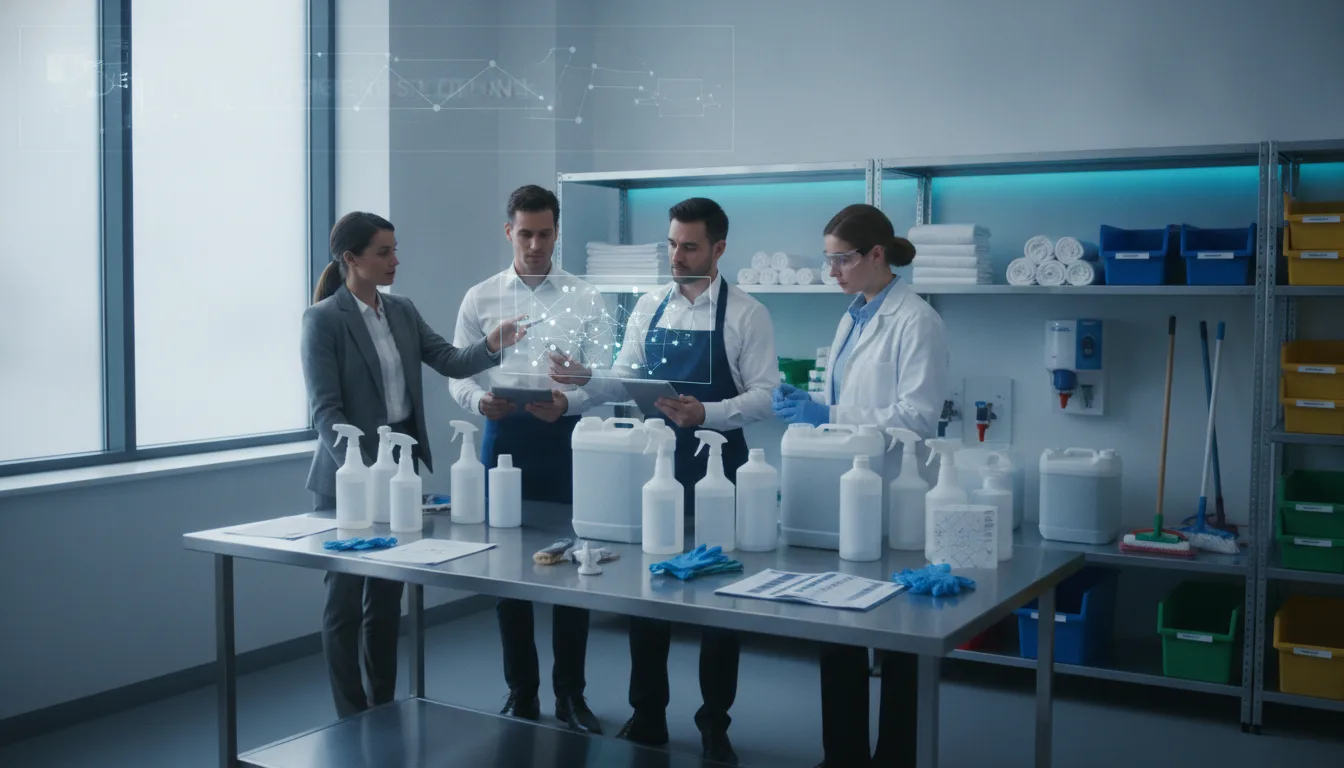
Illustrative, not a cost benchmark: a 40-room property may prefer smaller packs and periodic deliveries, while a 300-room hotel may need bulk packs, dispensing equipment and scheduled replenishment.
Match the Product Range to Your Cleaning Tasks
When assessing a hotel cleaning chemicals supplier, map routine tasks before comparing catalogues or unit prices: guest bathrooms, public areas, kitchens, floors, glass, linen handling, staff rooms and waste zones.
| Chemical category | Intended use | Essential safety checks | Buying considerations |
|---|---|---|---|
| Neutral/heavy-duty floor cleaner | Routine or soiled floors | Surface guidance, dilution ratios | Floor material and traffic |
| Bathroom cleaner | Fixtures and tiles | Label, safety data sheets | Scale and soil type |
| Glass/general cleaner | Mirrors and touchpoints | Ventilation directions | Streak control |
| Laundry chemicals | Linen processing | Handling instructions | Water conditions |
| Degreaser | Kitchen soils | PPE and contact time | Kitchen use requirements |
| Hotel disinfectants | Justified hygiene risks | Approved claims, local rules | Required contact time |
Cleaning, sanitising and disinfecting have different label directions and regulatory implications. A marble lobby, tiled bathroom and commercial laundry each require separate chemistry and compatibility checks.
Check Surface Compatibility Before Standardising Products
Surface damage can quickly erase savings from a low-cost product. Before standardising hotel housekeeping chemicals, map every surface by material and finish: natural stone, ceramic tile, grout, stainless steel, glass, wood finishes, carpets, resilient flooring and painted surfaces.
A capable hotel cleaning chemicals supplier should provide label instructions, compatibility guidance and a controlled test process for sensitive or high-value areas. Check that concentrates, acidic bathroom cleaner products, alkaline degreasers and hotel disinfectants suit the intended material at the specified chemical dilution ratios.
- Example, natural stone: confirm pH suitability, dilution, dwell time, rinse requirement and test-area approval before rollout.
- Record approved hospitality cleaning products by area, such as guest bathrooms, kitchens, lobbies and laundry rooms.
- Do not allow housekeeping substitutions without compatibility review, especially where finishes or sealants are involved.
Application-focused technical support can help assess conditions before products are deployed across a property. Explore Brykonchem's application-focused chemistry for an approach built around the cleaning application, not just the chemical category.
Verify Safety Documents, Labels, and Hygiene Requirements
An SDS, or Safety Data Sheet, sets out hazard, handling, first-aid, storage, transport and disposal information. It is a core control document, not paperwork to collect after delivery.
Before appointing a hotel cleaning chemicals supplier, request:
- Current safety data sheets and product labels
- Technical data sheets and chemical dilution ratios
- Ingredient or hazard information where required
- Efficacy or registration evidence for hotel disinfectants, where applicable and location-dependent
Confirm documents and labels match the supplied product, are understandable to users, and arrive before staff begin use. Chemical classification, workplace safety and disinfectant rules vary by jurisdiction, so verify local requirements before purchasing hospitality cleaning products.
Compare Dilution, Packaging, and True Cost per Use
For hotel housekeeping chemicals, compare cost per ready-to-use litre or per task, not the bottle or drum price. Chemical dilution ratios state how much concentrate is mixed with water for a specified application.
Use this calculation: concentrate price ÷ ready-to-use volume at the stated dilution = product cost per ready-to-use litre. Apply the same method to floor cleaner, bathroom cleaner, and other commercial cleaning chemicals.
- Confirm dosing pumps, closed dispensing, wall-mounted units, measuring tools, or clear manual-mixing instructions.
- Check pack size, tamper evidence, storage footprint, handling ergonomics, permitted refill options, empty-container disposal, and spill response.
- Request pricing that separates product, dispensing equipment, delivery, minimum orders, taxes, training, and service fees.
This comparison helps buyers control overuse, waste, and labour variability when assessing a hotel cleaning chemicals supplier.
Assess Delivery Reliability and Batch Consistency
Reliable supply of hotel housekeeping chemicals matters as much as product performance. Ask each supplier about stockholding, lead times, delivery coverage, order cut-off times, emergency procedures, and whether substitutions may occur.
- Request batch identification and applicable shelf-life information.
- Agree a process for damaged, incorrect, or inconsistent deliveries.
- Do not accept substitute hospitality cleaning products until task fit, labels, safety data sheets, chemical dilution ratios, and staff communication are confirmed.
Set minimum stock for high-use floor cleaner, bathroom cleaner, laundry chemicals, and hotel disinfectants around occupancy, delivery frequency, and storage capacity. For example, a property using 20 litres weekly with a two-week lead time and 10 litres of safety stock would set a reorder point of 50 litres (20 × 2 + 10). Each property’s calculation will differ.
Evaluate Training, Technical Support, and Problem Resolution
Supplier support affects staff adoption, chemical control, and cleaning results. Ask about product selection, dilution setup, housekeeping training, troubleshooting, and periodic reviews.
Useful recommendations should reflect soil type, water quality, temperature, concentration, contact time, mechanical action, equipment, and actual site conditions. Before appointment, agree escalation contacts, response expectations, trial criteria, and review timing.
- Illustrative scorecard weights: product fit 25%, documentation 15%, delivered cost 20%, supply reliability 15%, training 15%, response time 10%.
Brykonchem applies an application-focused approach to facility hygiene and technical recommendations, rather than presenting a standard hotel chemical catalogue.
Use a Consistent Supplier Comparison Process
Ask each hotel cleaning chemicals supplier to respond to the same brief: product list, usage assumptions, delivery terms, documentation requirements and support criteria. This makes commercial cleaning chemicals comparable on operating value, not catalogue breadth.
- Map cleaning needs by area and task.
- Request labels, safety data sheets and dilution instructions.
- Compare ready-to-use cost.
- Conduct a controlled trial.
- Approve products and specifications.
- Train users.
- Review performance regularly.
Trial high-use hotel housekeeping chemicals under normal conditions. Measure cleaning results, staff ease of use, dilution accuracy, consumption, surface condition and issue-response time.
Keep approvals, SDSs, product-change notices and training records in one accessible location. For application-specific hygiene guidance, explore Brykonchem's application-focused chemistry, including process assessment, performance analysis, technical recommendations and implementation refinement.
Frequently Asked Questions
How should hotels compare cleaning chemical costs?
Hotels should compare cleaning chemicals by the cost of correctly diluted, ready-to-use solution, not just the pack price. Include dispensing equipment, delivery, storage, waste, staff time, and the cost of rework when cleaning results are inconsistent. The lowest-priced pack may therefore have a higher overall operating cost.
Should a hotel use one cleaning chemical supplier for every task?
Not necessarily. A single supplier can simplify ordering, staff training and documentation, but each product should still be assessed for the task, surface compatibility, required hygiene level, service support and local compliance requirements. The best choice is a supplier that can match hygiene and sanitation chemistry to the hotel’s actual operating conditions.
How often should a hotel review its chemical supplier?
A hotel should review its chemical supplier on a scheduled basis and whenever consumption, occupancy, service issues, staff feedback, products, surfaces, facilities, or applicable regulations change. Reviews should confirm that hygiene chemicals, dosing practices and staff guidance still match operating conditions, cleaning requirements and cost-control goals.
What should a hotel do before changing cleaning chemicals?
Before changing cleaning chemicals, a hotel should run a controlled review of product labels and SDSs, surface compatibility, dilution equipment, storage requirements, current stock and disposal plans. Train staff on the new procedures, trial the products in representative areas, and confirm cleaning results, safety and operational fit before full implementation.
Conclusion
Choosing a hotel cleaning chemicals supplier should come down to more than product range or price: buyers need chemistry suited to their cleaning tasks, hygiene risks, water conditions, surfaces and operating routines. Brykonchem brings an application-focused approach to hygiene and sanitation, assessing these conditions to recommend and refine suitable chemical solutions.
Need hygiene chemistry matched to your operating conditions?
Brykonchem can assess cleaning conditions, analyse factors affecting performance, and recommend application-focused hygiene and sanitation chemistry with implementation support.
Learn more